A Blue-Hour Photo Walk Without Fancy Gear
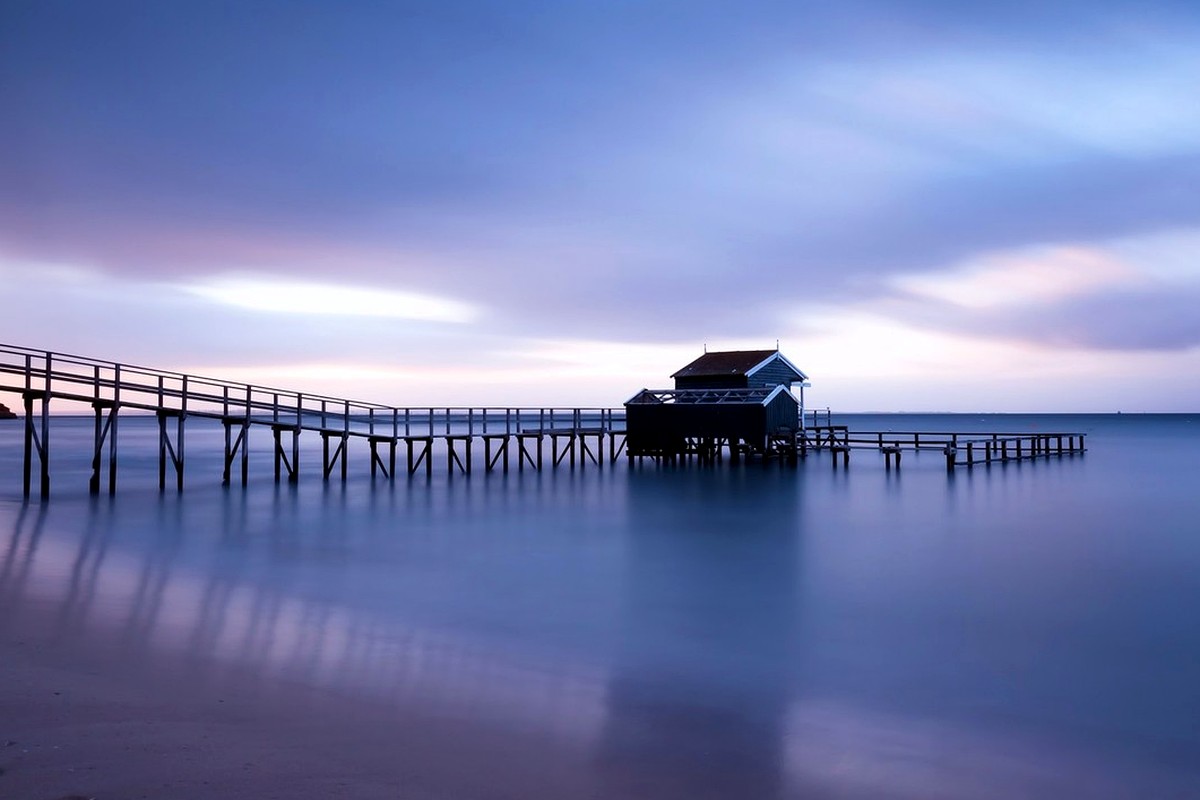
Blue hour is the short stretch of evening when daylight has mostly faded but the sky still holds a deep, cool color. It can make an ordinary waterfront, bridge, station, or quiet street feel newly arranged. You do not need specialist equipment to enjoy it. A phone or a familiar camera is enough, especially if the goal is to look carefully rather than collect technically perfect pictures.
Choose a route you can repeat
A useful blue-hour walk is short. Pick a route with three or four reliable stopping points: a stretch of open sky, a reflective surface, a row of lights, and one place where you can stand still without blocking anyone. Repeating a familiar route is helpful because you spend less attention on navigation and more on what the light is doing.
Water is an obvious choice, but it is not essential. Shop windows, polished stone, wet pavement, glass bus shelters, and even dark car roofs can catch the changing sky. The interesting part is the contrast between the remaining natural light and the first strong artificial lights of the evening.
Work with the light instead of fighting it
As the scene grows darker, cameras often try to make everything look brighter than it felt. That can flatten the atmosphere. Before changing settings, try something simpler: tap or meter on a brighter part of the scene and allow the shadows to stay shadowy. A slightly darker frame often preserves the sense of evening better than an aggressively bright one.
- Hold the camera against a railing or solid surface when you want extra steadiness.
- Take one wide frame, then move closer for a detail rather than zooming from the same spot.
- Wait for a person, bicycle, boat, or passing light to give an empty composition a sense of scale.
- Try both horizontal and vertical versions when the sky or reflections are doing most of the work.
Let reflections simplify the scene
Reflections can turn a busy place into a few large shapes. Instead of photographing every lamp along a waterfront, you might frame one warm light and the long line it makes on the water. A window can hold both the interior and the street outside. A puddle can bring a sign, tree, or piece of sky into a lower part of the frame that would otherwise be empty.
It helps to move a little. A reflection that looks cluttered from one angle can become clean after two steps to the side. Blue hour rewards this kind of small adjustment because the scene is already visually restrained.
Make a sequence, not a hunt for one perfect picture
One of the easiest ways to finish a photo walk with something satisfying is to think in groups of three or five images. Start with a wide scene that establishes the place. Add a medium view with a clear subject, then a close detail: a handrail catching light, ripples under a pier, a glowing window, or the texture of a wall after dusk.
This approach takes pressure off individual frames. A small sequence can tell the story of an hour better than a single spectacular image, and it encourages you to notice transitions rather than only obvious landmarks.
Stop while there is still some light left
The most enjoyable blue-hour walks usually end before they turn into a long night shoot. Once the sky has gone fully dark, the character of the exercise changes. Save your favorite frames, make a quick note about which location worked best, and come back another evening when the weather is different. Clouds, clear air, mist, and recent rain can make the same short route look completely new.
The real advantage of blue hour is not that it makes every photograph dramatic. It gives you a compact period in which light changes quickly enough to keep you attentive. That is a useful habit for any kind of photography.